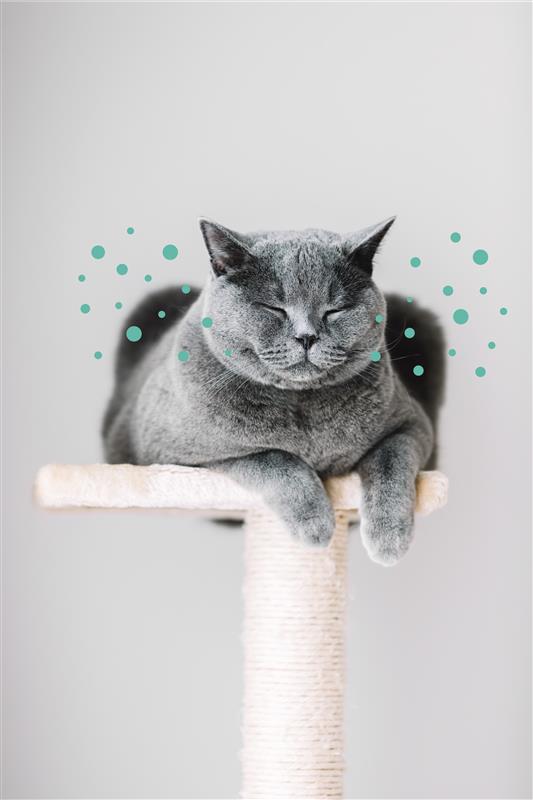
Chemical communication, such as pheromones, is a natural and innate way animals interact, like sight, smell, or taste, and requires no learning. They are chemical signals that animals naturally emit to communicate with each other. They trigger behavioral and physiological responses in other members of the species and play a key role in:
Dr. Patrick Pageat founded IRSEA (the world pioneer in pheromone research) and developed the key compositions of the first pheromone-based products on the market with Adaptil and Feliway. Today, he leads the Group-IRSEA, of which SIGNS Labs is a member.
SIGNS Labs translates scientific insights into practical pheromone products. With a focus on practical application, SIGNS Labs turns pioneering pheromone research into products that support animals in real-life situations.
Animals detect pheromones using a specialized system: the Vomeronasal organ.
1. Vomeronasal canal: captures pheromones from the environment.
2. Vomeronasal organ (VNO): contains receptors that detect pheromone molecules.
3. Accessory olfactory bulb: sends information to the brain for processing.
4. Brain (medial amygdala): interprets pheromone signals, coordinating survival behaviors, emotional responses, and social interactions.
This natural detection system allows animals to respond instantly to chemical cues. For decades, our sister entity IRSEA has studied the vomeronasal organ to understand how mammals communicate without words. This research enables us to design innovative solutions for animal well-being, based on chemical communication.
There are different families of pheromones, each with a specific role in animal communication. These act as invisible language. Unlike regular smells, pheromones do not require conscious thought: they influence how an animal feels and reacts.
Pheromones help create a sense of safety, support bonding, promote well-being, and guide social behaviors. Understanding these different types of pheromones helps explain how they contribute to your pet’s emotional balance.
.webp)
They help create a strong mother-offspring bond and provide security and emotional stability, beginning while the animal is still in the womb. In our Secure range, these natural signals are carefully replicated to accompany pets throughout life.
Example: Puppies stay confident and curious when away from their mother.
Nature’s guide for reproduction. They signal readiness, coordinate mating behaviors, and help pets act with instinctive clarity during reproductive cycles.
Example: A male cat knows when a female is ready to mate.
Claim and organize your space. These pheromones help pets feel in control of their environment, establishing clear boundaries and social order.
Example: Cats rubbing their cheeks on furniture to mark their territory and confidently navigate their home.
Prepare and react. These pheromones trigger instinctive responses to danger, allowing animals to respond quickly and protect themselves.
Example: Rabbits immediately hide when danger is near, staying one step ahead.
.webp)
From birth, animals use chemical signals to interact with their environment and conspecifics. These signals are present from the embryonic stage, during mother-offspring bonding, and continue to guide social interactions throughout life, providing them with reassurance and confidence.
Today, animals are deprived of their natural chemical signals, whereas in the past they lived in a natural way, together in communities and fully exposed to the cues of their species. Everyday human activities such as cleaning, separating littermates, or keeping them in highly sanitized environments can further dilute or mask these essential signals, which may lead to behavioral challenges, particularly in situations such as:
Without these natural chemical signals, pets may struggle to manage their emotions and display negative behaviors. What makes SIGNS Labs unique is that we are the only company in the world to maintain this chemical continuity throughout an animal’s life.
We support them in every situation from learning and exploration to social interactions and new experiences. Restoring these pheromones helps pets stay confident and adaptable in control, no matter the circumstances.
It can help :
By reintroducing species-specific pheromones, animals maintain natural behaviors, adapt better socially, and experience fewer stress-related reactions.
For over 30 years, Dr. Patrick Pageat and the team of IRSEA have been advancing the scientific understanding of chemical communication in animals. He founded IRSEA, developed the first pheromone-based products on the market, and today leads the Group-IRSEA, of which SIGNS Labs is a member. SIGNS Labs focusing on practical pheromone products that support natural behavior, emotional well-being, and social adaptation.
Key research principles include:
This combination of research and innovation ensures that pheromones can be effectively used to support pets’ well-being.
.webp)
.webp)
Our behavioral tests confirm that pheromones help animals feel secure and ensure confidence in everyday situations.
For example, cats exposed to pheromone display more rubbing checks along his environment, a sign of security.
Not all pheromone-based products are equally effective. Here’s how to choose the best solution for your companion:
Choosing the right solution ensures that pets can benefit fully from the natural effects of the product.
.webp)
scientific publications on behavioral effects of pheromones.
patents ensuring quality and optimal diffusion of pheromones.
Our research goes beyond basic science: every product is designed to interact with the animal’s sensory and emotional systems, enhancing confidence, adaptability, and well-being. By combining scientific rigor, innovative formulations, and a deep understanding of pet behavior, SIGNS Labs delivers solutions that are safe, effective, and truly transformative for companion animals.